
Pilot-operated pressure relief valves
Luofu LFXD pilot-operated valves cover inlet sizes NPS 1 to 8 with API orifice letters D to T. Pressure ratings run from Class 150 to Class 2500 with ASME flanges, or PN16 to PN400 with PN flanges. Temperatures run from -268 to +720 °C (-450 to +1,328 °F). Back pressure does not affect how the valve opens and closes, and the main valve reaches full lift without extra overpressure.
Where it is used
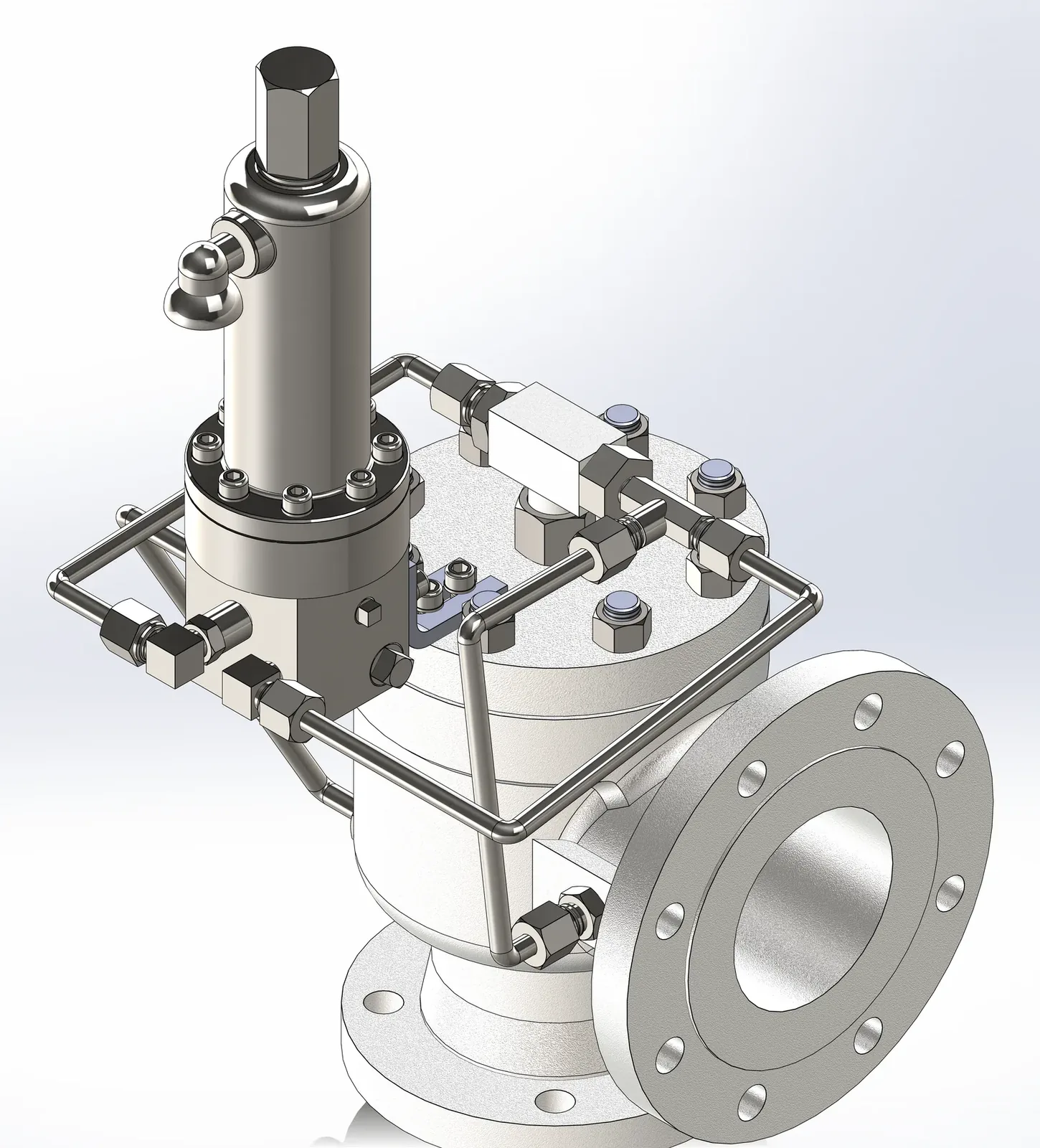
A pilot-operated valve has two parts: a main valve that carries the relief flow and a small pilot valve that controls it. System pressure holds the main valve closed. At the set pressure the pilot lets the main valve open.
Opening and closing are not affected by back pressure, and the main valve reaches full lift without extra overpressure. Typical duties are gas processing and pipeline systems with variable back pressure, and valves that relieve into a flare header. Give the back pressure and the operating pressure on the data sheet, and the sizing confirms whether the LFXD fits the duty.
Technical data
- Series
- LFXD pilot-operated
- Inlet size
- NPS 1 to 8 (DN25 to DN200)
- Orifice
- API 526 letters D to T, 1"D2" to 8"T10"
- Pressure rating
- Class 150 to Class 2500 ASME flanges
PN16 to PN400 PN flanges - Temperature range
- -268 to +720 °C (-450 to +1,328 °F)
- Set pressure
- Confirmed in the sizing for each tag number
- Set pressure tolerance
- ±3% of set pressure
- Overpressure
- 10% of set pressure, maximum
- Blowdown
- 10% of set pressure, maximum
Adjustable from outside the valve - Seat tightness
- API 527
- Pilot
- Pop or modulating action, non-flowing type
- Back pressure
- Does not affect opening and closing
- Main valve lift
- Full lift without extra overpressure
- Seat
- Soft seat or metal seat
- Body and trim materials
- Carbon steel, austenitic and martensitic stainless steel, duplex and super duplex stainless steel, 6Mo, Alloy 400, Alloy B, Alloy C, Alloy 625, Alloy 825
These are the limits of the series. The limits of one valve depend on its size, rating, and materials. Service near either end of the temperature range needs special materials. Our own cryogenic tests go down to -196 °C. For service below that, we source the materials through our supplier network and arrange the tests with a third-party laboratory. The sizing confirms the limits and the materials for each tag number. The Class range and the PN range are the ranges we offer with ASME flanges and with PN flanges. One is not a conversion of the other.
Structure
The pilot mounts on top of the main valve, and small-bore tubing connects the two, as the rendering shows. The pilot senses the inlet pressure and opens the main valve at the set pressure.
Blowdown is adjusted on the outside of the valve, so it can be reset without taking the valve apart.
Options
Choose these at the inquiry stage. The quotation confirms the details and which ones apply to your tag:
- Pop or modulating pilot
- Soft seat or metal seat
- Device for testing the set pressure on line
- Filter in the pilot supply line
- Backflow protection
- Remote sensing connection
Standards and certifications
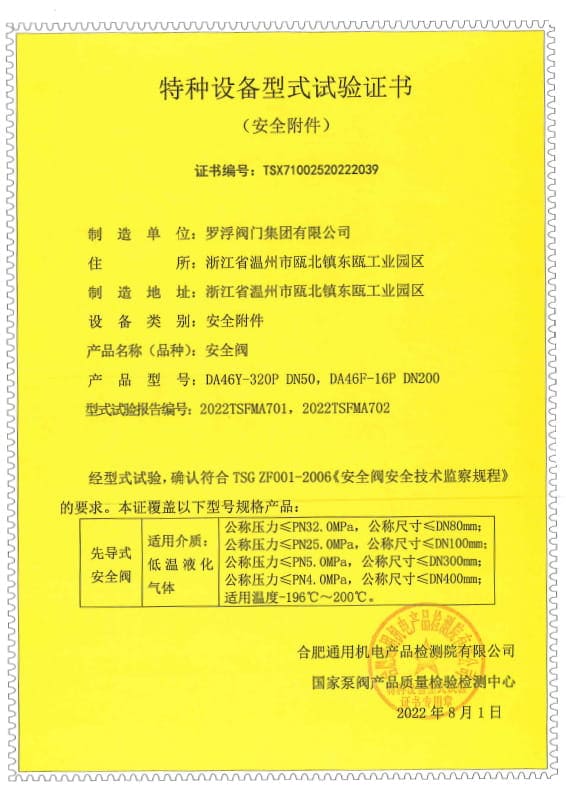
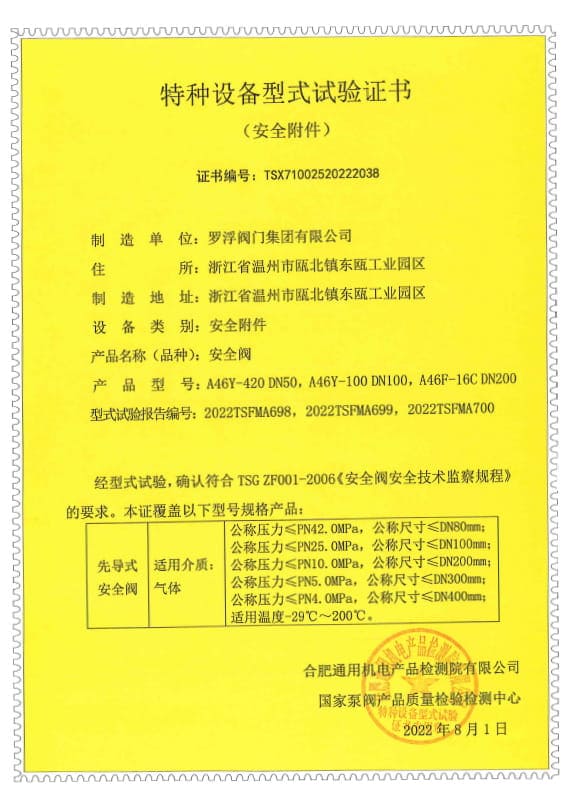
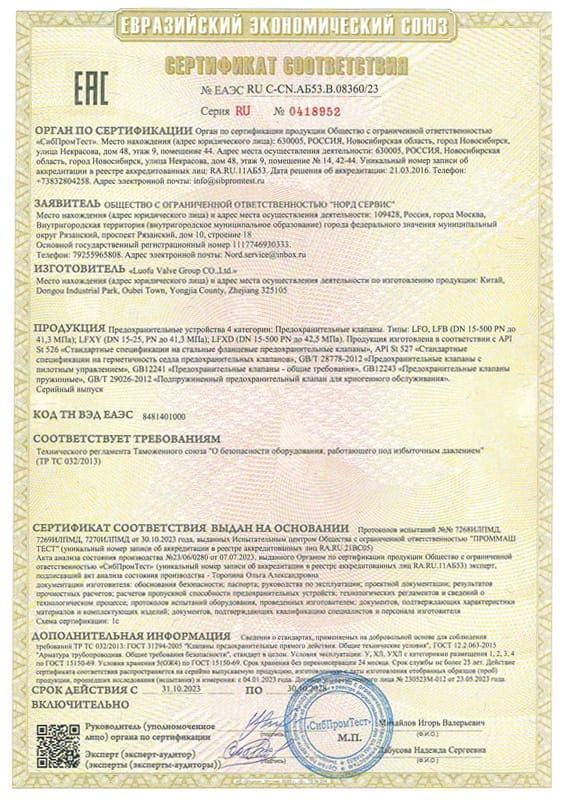
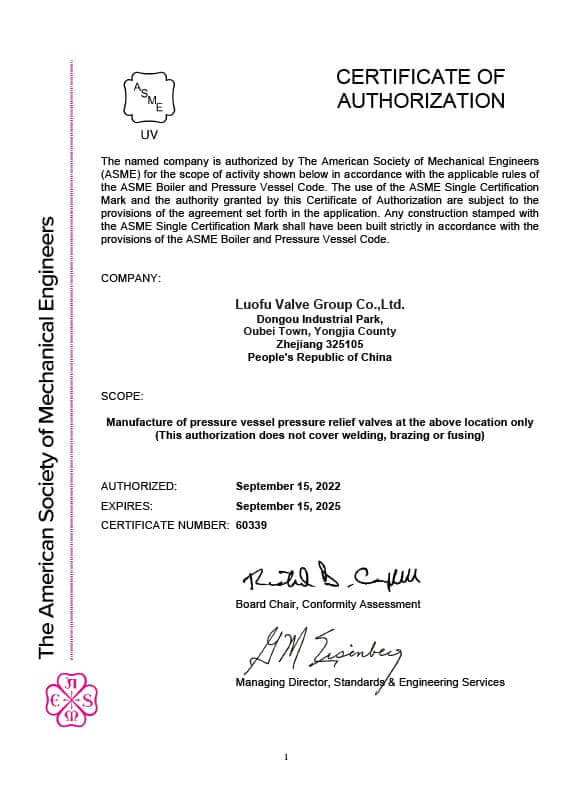
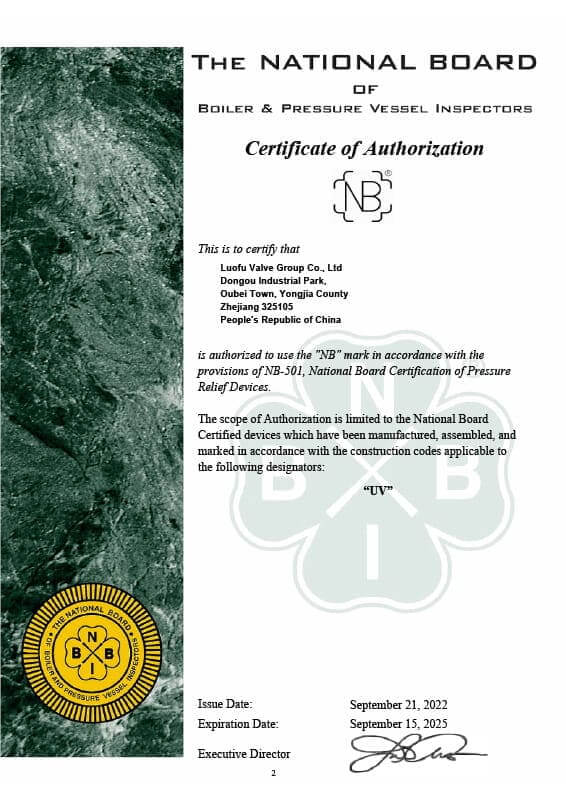
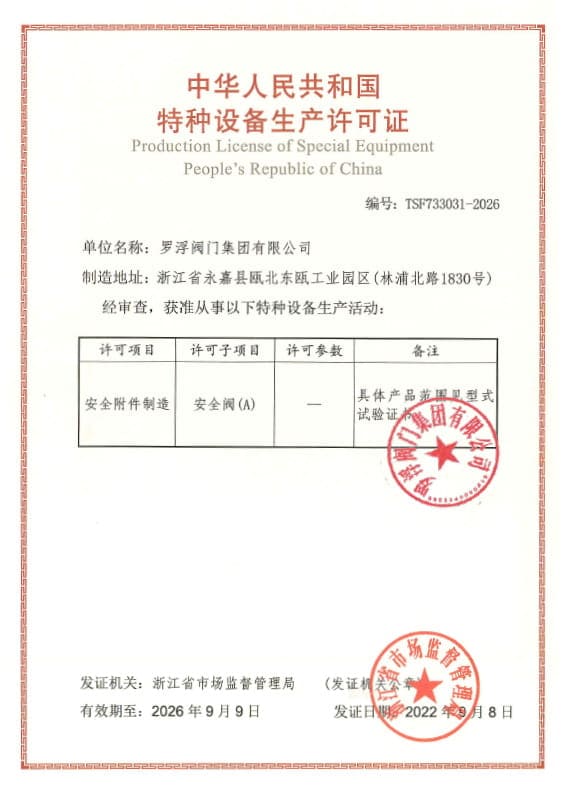
Seat tightness is tested to API 527. Orifice sizes use the API 526 letters D to T. Two type tests and the EAC certificate name pilot-operated valves. The ASME, National Board, and TS documents cover Luofu's production of relief valves. The quotation states which of them apply to each tag:
What we need to quote this valve
Send these with your inquiry. A completed data sheet covers all of them, and the PSV data sheet page explains each line:
- Medium and phase (gas, vapor, liquid, or two-phase)
- Required relieving capacity
- Set pressure
- Back pressure at the outlet
- Operating and relieving temperature
- Inlet and outlet size and rating
- Material requirements
- Design code (ASME, API, EAC, or the project specification)
- Quantity, per tag number
- Project country
No data sheet yet? Send what you have. We ask for the rest by email.
Related series
Questions engineers ask
Pilot-operated or spring-loaded: how do I choose?
Start from the back pressure. High or varying back pressure points to the pilot-operated LFXD, because back pressure does not affect how it opens and closes. The medium and the operating margin also count. Send the full data sheet, and the sizing proposes the type.
Do I need a pop or a modulating pilot?
A pop pilot opens the main valve fully at the set pressure. A modulating pilot opens it in proportion to the relief flow. Send the relief cases and the required capacity, and the sizing proposes the pilot type.
Soft seat or metal seat: which one fits my service?
A soft seat gives tighter shutoff within the temperature and chemical limits of the seal material. A metal seat is the choice beyond those limits. Give the medium and the operating and relieving temperatures on the data sheet, and we propose the seat in the sizing.
What does a non-flowing pilot mean?
The medium does not flow through the pilot continuously while the main valve is open. Medium passes through the pilot only while the main valve opens or closes. The LFXD uses a non-flowing pilot.
Is the LFXD type tested for cryogenic service?
The type tests on file cover cryogenic service down to -196 °C (-321 °F). The series limit is lower. For service below -196 °C, we source the materials through our supplier network and arrange the tests with a third-party laboratory. State the temperature and the medium on the data sheet, and the sizing confirms the materials.