
Spring-loaded pressure relief valves
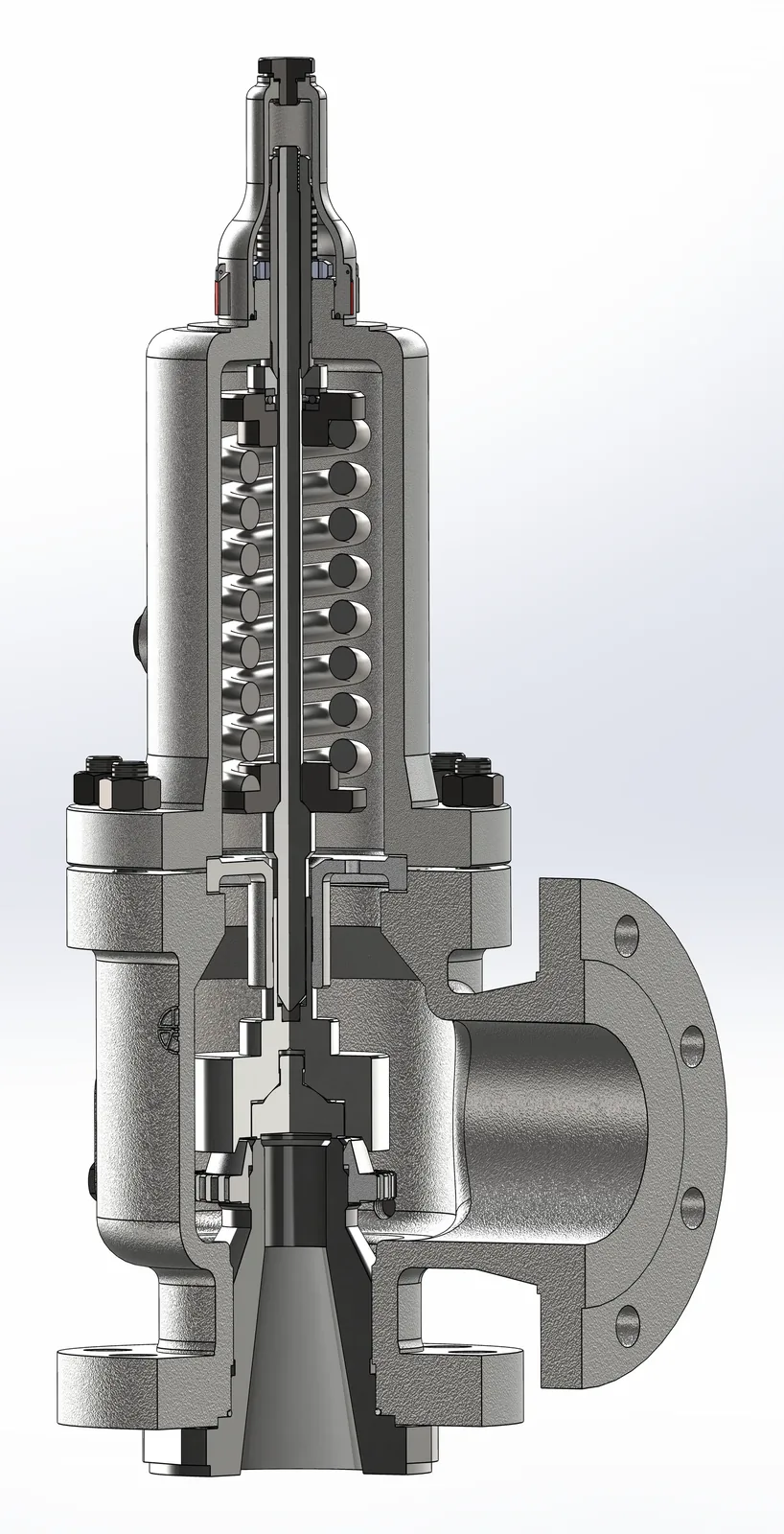
Luofu LFO (conventional) and LFB (bellows) valves cover inlet sizes NPS 1 to 8 with API orifice letters D to T. Pressure ratings run from Class 150 to Class 2500 with ASME flanges, or PN16 to PN400 with PN flanges. Temperatures run from -268 to +720 °C (-450 to +1,328 °F). The nozzle screws into the body, the seat and disc are hard faced with Stellite, and seat tightness is tested to API 527.
Where it is used
Spring-loaded valves are the default choice for most process relief duties. The type tests on file cover steam, gas and liquid, and cryogenic service down to -196 °C. The materials list runs from carbon steel to nickel alloys.
Choose LFO, the conventional type, when back pressure is low and steady and the medium does not attack the spring and guide. Choose LFB, the bellows type, when back pressure varies or the medium is corrosive. The bellows isolates the spring and the upper trim from the medium and keeps the set pressure steady as back pressure changes.
Technical data
- Series
- LFO conventional
LFB balanced bellows - Inlet size
- NPS 1 to 8 (DN25 to DN200)
- Orifice
- API 526 letters D to T, 1"D2" to 8"T10"
- Pressure rating
- Class 150 to Class 2500 ASME flanges
PN16 to PN400 PN flanges - Temperature range
- -268 to +720 °C (-450 to +1,328 °F)
- Set pressure
- Confirmed in the sizing for each tag number
- Set pressure tolerance
- ±3% of set pressure
- Overpressure
- 10% of set pressure, maximum
- Blowdown
- 10% of set pressure, maximum
Adjusted with the nozzle ring only - Seat tightness
- API 527
- Seat and disc
- Stellite hard facing on the nozzle seat and the disc
- Nozzle
- Full nozzle, screwed into the body
- Body and trim materials
- Carbon steel, austenitic and martensitic stainless steel, duplex and super duplex stainless steel, 6Mo, Alloy 400, Alloy B, Alloy C, Alloy 625, Alloy 825
These are the limits of the series. The limits of one valve depend on its size, rating, and materials. Service near either end of the temperature range needs special materials. Our own cryogenic tests go down to -196 °C. For service below that, we source the materials through our supplier network and arrange the tests with a third-party laboratory. The sizing confirms the limits and the materials for each tag number. The Class range and the PN range are the ranges we offer with ASME flanges and with PN flanges. One is not a conversion of the other.
Structure
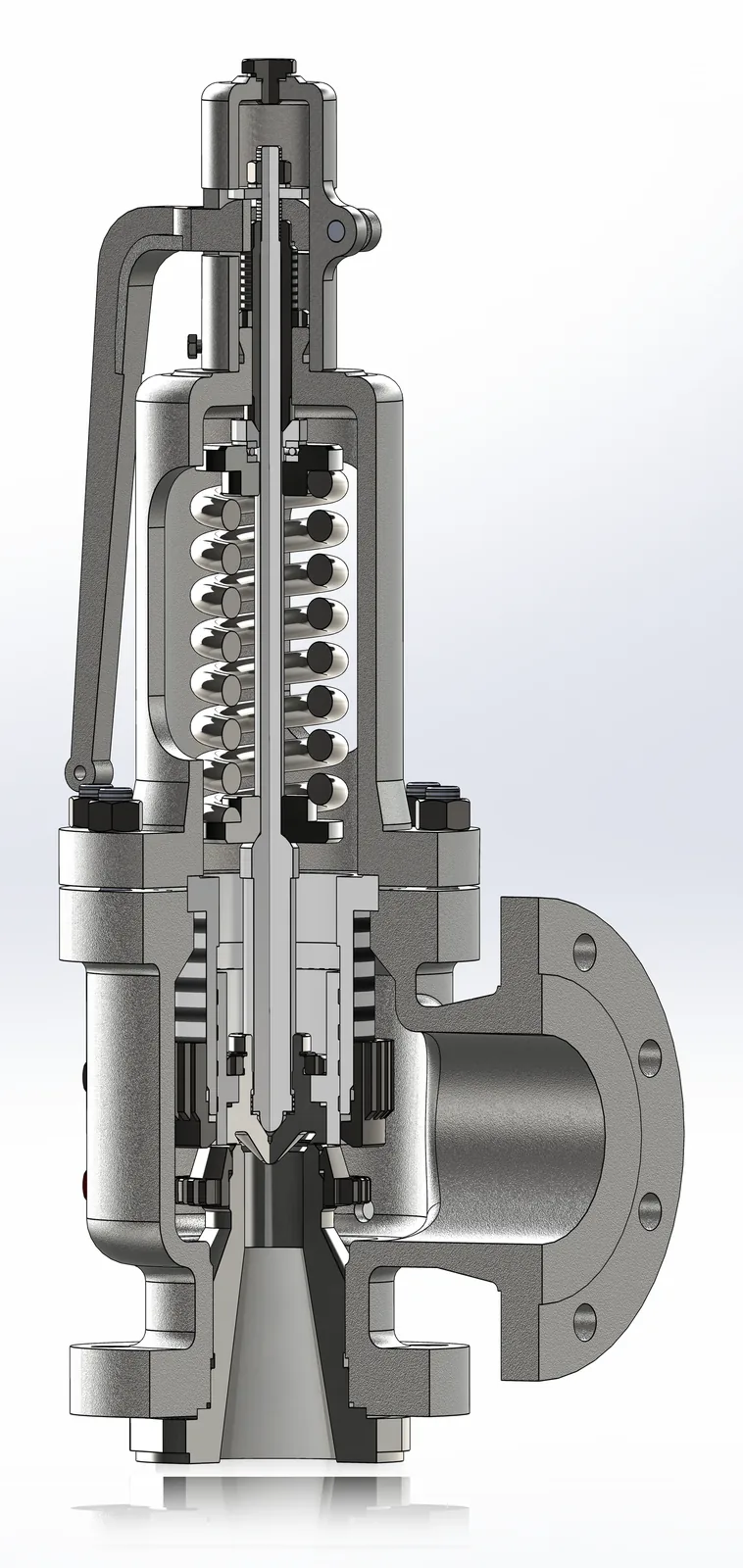
The full nozzle screws into the body and forms the inlet passage and the seat in one part. The seat face of the nozzle and the disc are hard faced with Stellite.
Blowdown is adjusted with the nozzle ring only. Blowdown is the drop below the set pressure at which the valve reseats.
On the LFB, a bellows sits between the disc holder and the bonnet. It seals the spring, spindle, and guide from the medium. It also balances the back pressure that acts on the disc.
A lifting lever, shown in the cutaway, lets the operator lift the disc off the seat for a function check.
Options
Choose these at the inquiry stage. The sizing confirms which ones apply to your tag:
- Lifting lever, as shown in the cutaway
- Balanced bellows, series LFB
- Body and trim materials from the table, including nickel alloys for corrosive media
- Inlet and outlet ratings from Class 150 to Class 2500
Standards and certifications
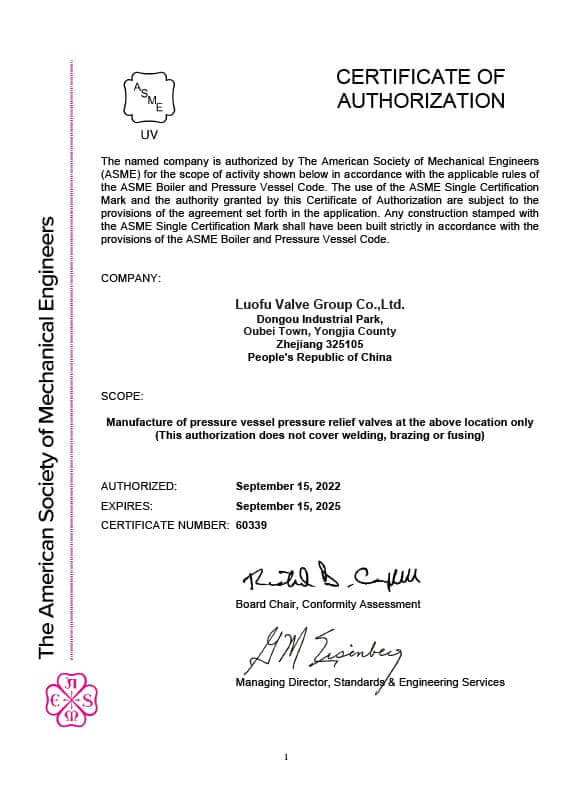
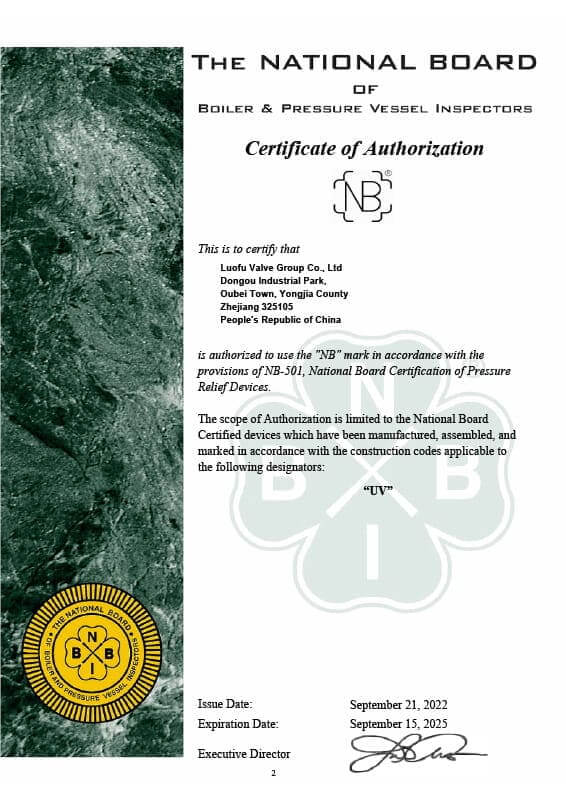
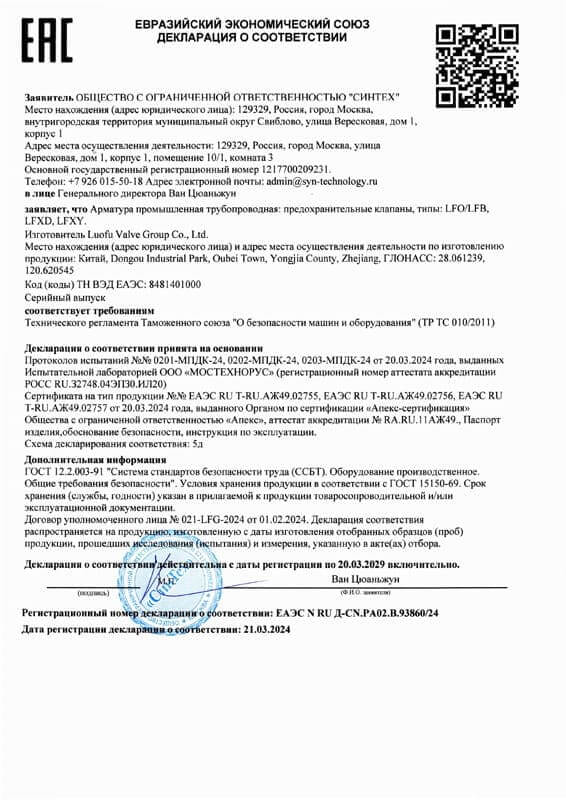
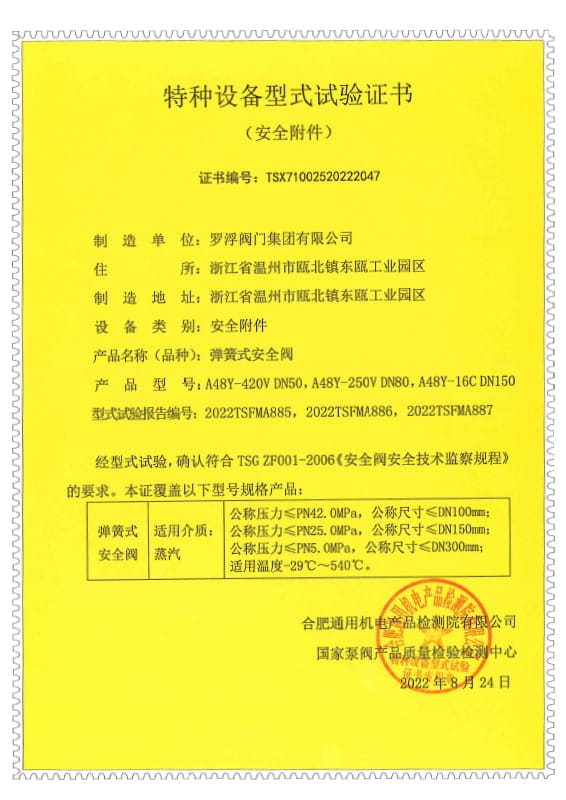
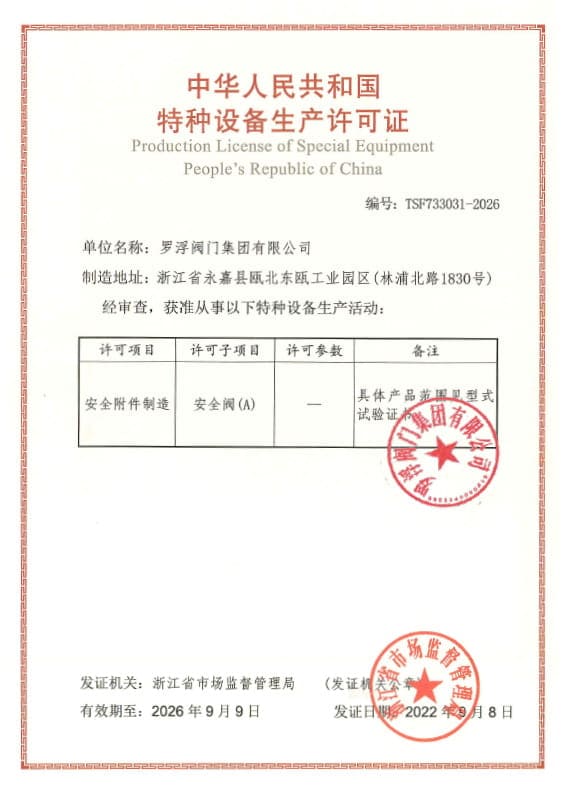
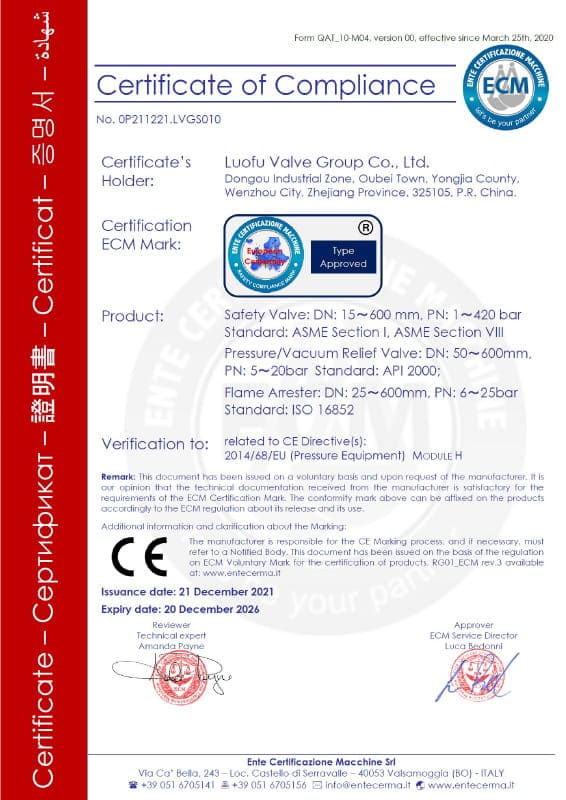
Seat tightness is tested to API 527. Orifice sizes use the API 526 letters D to T. These certificates apply to the series:
What we need to quote this valve
Send these with your inquiry. A completed data sheet covers all of them, and the PSV data sheet page explains each line:
- Medium and phase (gas, vapor, liquid, or two-phase)
- Required relieving capacity
- Set pressure
- Back pressure at the outlet
- Operating and relieving temperature
- Inlet and outlet size and rating
- Material requirements
- Design code (ASME, API, EAC, or the project specification)
- Quantity, per tag number
- Project country
No data sheet yet? Send what you have. We ask for the rest by email.
Related series
Questions engineers ask
What is the difference between LFO and LFB?
LFO is the conventional type, with no bellows. LFB has a bellows that balances the back pressure and seals the spring and guide from the medium. Choose LFB when back pressure varies or the medium is corrosive.
Can you quote from the valve size and rating alone?
No. The orifice, the materials, and the price follow from the set pressure, medium, capacity, back pressure, and temperature. Send those five items, or the data sheet, and we size the valve first.
Can the valve carry the ASME UV stamp?
Luofu holds the ASME UV Certificate of Authorization and the National Board UV designator. Tell us in the inquiry if the valve must carry the UV stamp.
Which seat tightness test do you use?
Seat tightness is tested to API 527. The data sheet should state any stricter leakage requirement of the project.
How long is the lead time?
We confirm the lead time after the data sheet is confirmed, because size, rating, and materials decide it. The quotation states the lead time for each tag.