
Thermal relief valves
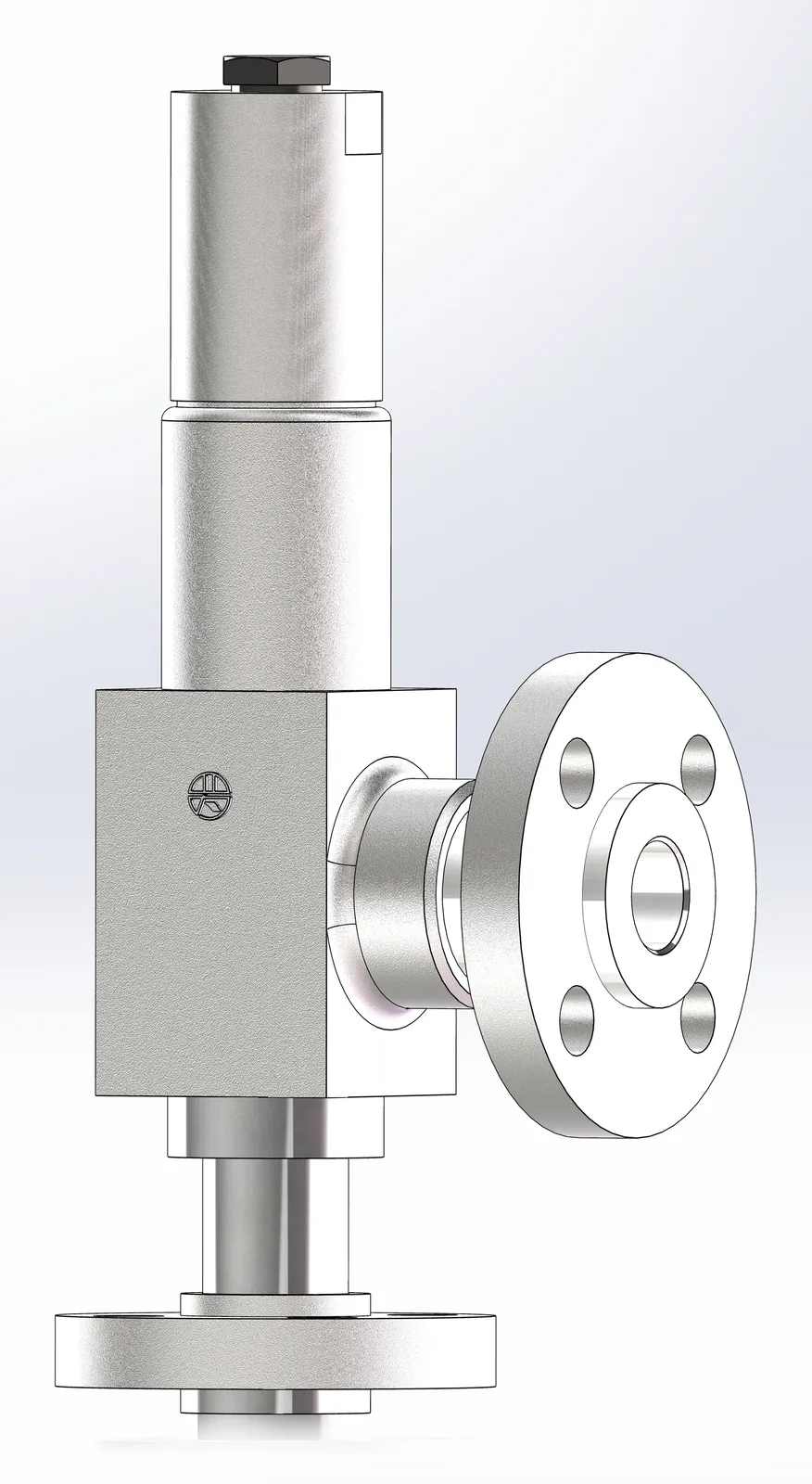
Luofu LFXY valves relieve the pressure that builds when liquid trapped in a line or vessel heats up. Inlet sizes run from NPS 1/2 to 1 (DN15 to DN25). Pressure ratings run from Class 150 to Class 900 with ASME flanges, or PN10 to PN150 with PN flanges. The temperature range is -196 to +427 °C (-321 to +801 °F), and connections are flanged or threaded.
Where it is used
LFXY valves protect pipe sections and equipment that can be blocked in while full of liquid. When the trapped liquid warms up, the pressure rises fast, because liquid hardly compresses. The valve lets out a small volume and recloses.
The valves are compact, so they fit on small branch connections. The small orifice matches the small relief flow of a thermal expansion case.
Technical data
- Series
- LFXY small orifice
- Inlet size
- NPS 1/2 to 1 (DN15 to DN25)
- Orifice
- Letters C and D, 1/2"C1/2" to 1"D1"
- Pressure rating
- Class 150 to Class 900 ASME flanges
PN10 to PN150 PN flanges - Temperature range
- -196 to +427 °C (-321 to +801 °F)
- Set pressure
- Confirmed in the sizing for each tag number
- Connections
- Flanged or threaded
These are the limits of the series. The limits of one valve depend on its size, rating, and materials. The sizing confirms them for each tag number. The Class range and the PN range are the ranges we offer with ASME flanges and with PN flanges. One is not a conversion of the other.
Structure
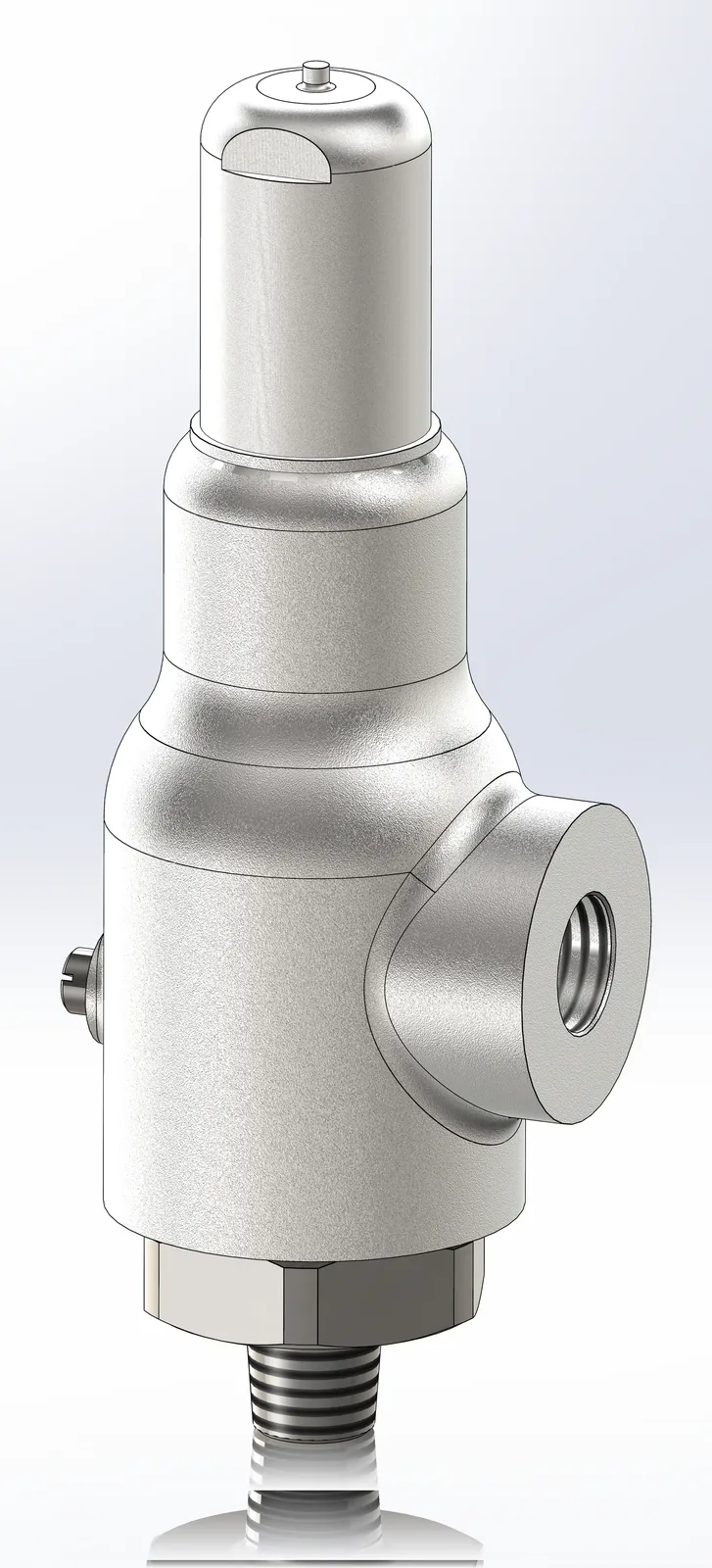
The flanged version takes the flange rating of the pipe class. The threaded version is for lines where the pipe class allows threaded joints.
Standards and certifications
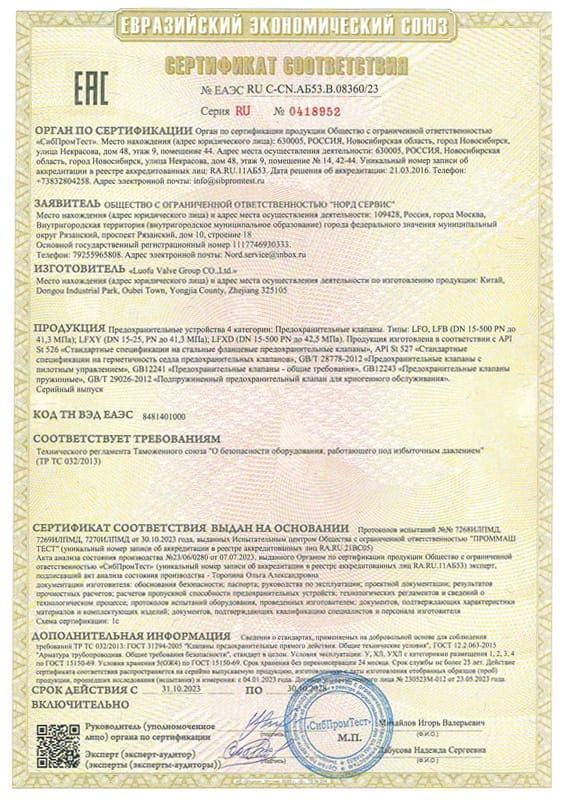
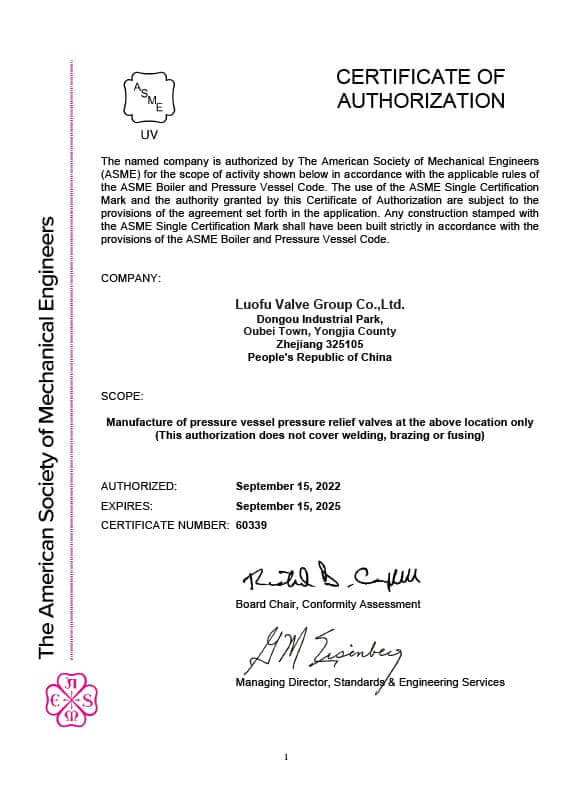
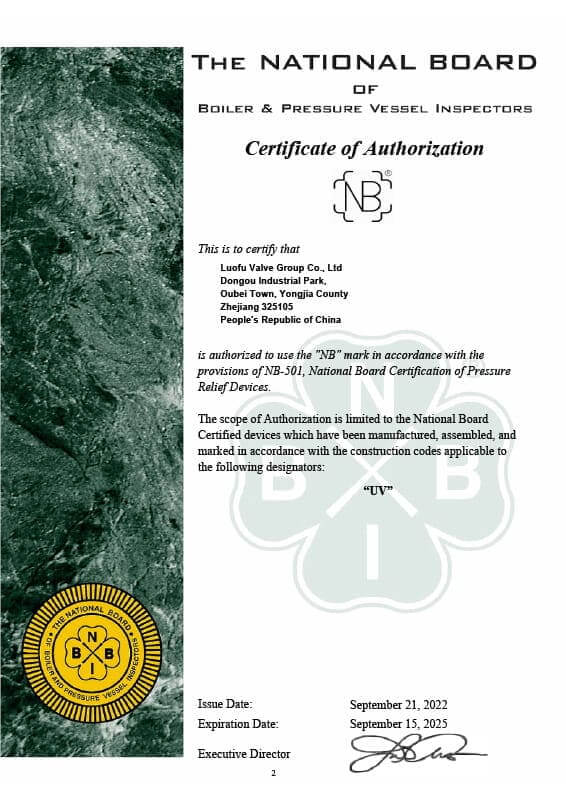
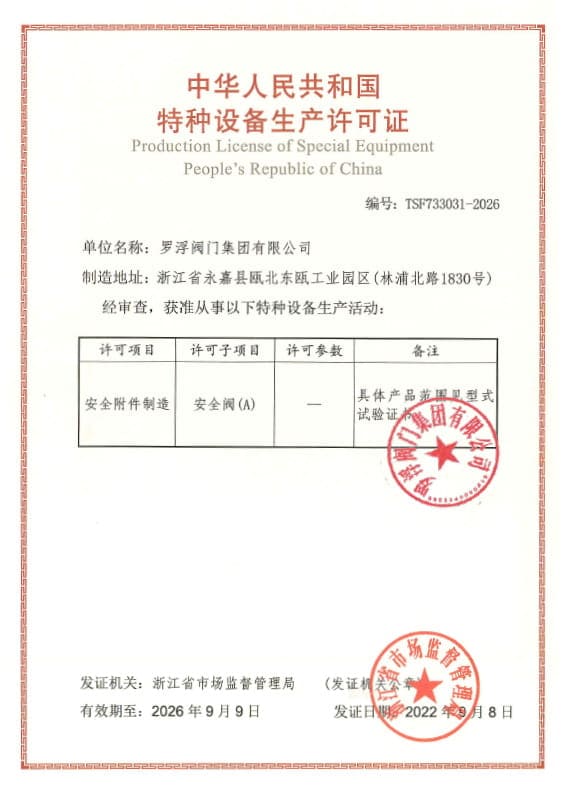
The EAC certificate below lists the LFXY series. The ASME, National Board, and TS documents cover Luofu's production of relief valves. The quotation states which of them apply to each tag:
What we need to quote this valve
Send these with your inquiry. A completed data sheet covers all of them, and the PSV data sheet page explains each line:
- Medium and phase (gas, vapor, liquid, or two-phase)
- Required relieving capacity
- Set pressure
- Back pressure at the outlet
- Operating and relieving temperature
- Inlet and outlet size and rating
- Material requirements
- Design code (ASME, API, EAC, or the project specification)
- Quantity, per tag number
- Project country
No data sheet yet? Send what you have. We ask for the rest by email.
Related series
Questions engineers ask
How do I know a line needs a thermal relief valve?
Your process engineer identifies the lines where liquid can be trapped between closed valves and then warm up. On the data sheet, a relief case of "thermal expansion" tells us the valve is for this duty.
How is a thermal relief valve sized?
The relief rate is small, so a small valve is often enough. We still check the capacity in the sizing, from the liquid, the heat input, and the trapped volume.
Flanged or threaded: which connection should I choose?
Follow the pipe class of the line. It states whether threaded joints are allowed for that service. Give the connection on the data sheet, and the quotation confirms it.
Can LFXY valves go on cryogenic liquid lines?
Yes. The temperature range reaches -196 °C (-321 °F). Give the liquid and the minimum design temperature on the data sheet, and the sizing confirms the materials.