
Steam-service pressure relief valves
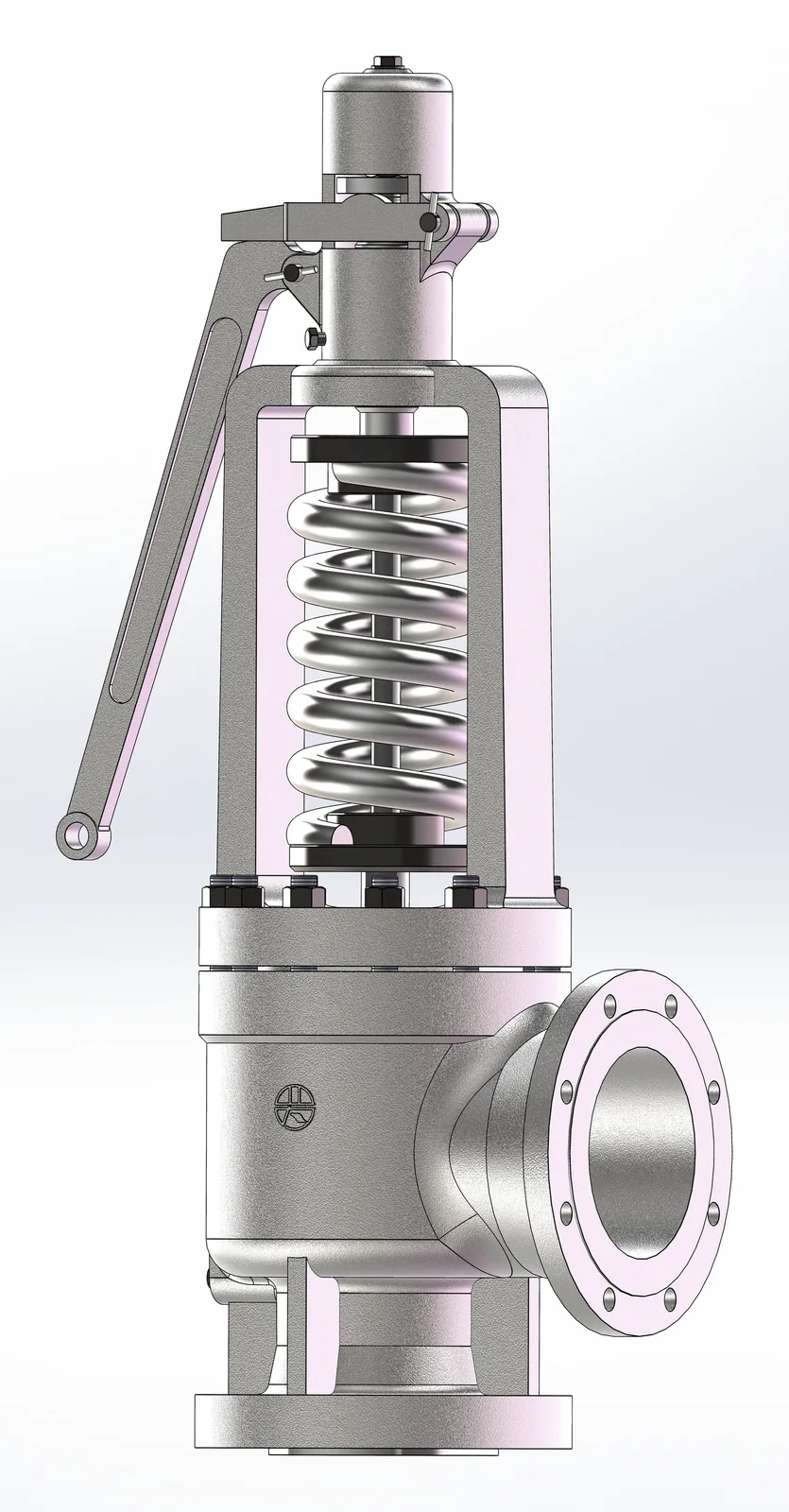
Luofu LFGS valves are for high-pressure steam up to 650 °C (1,202 °F). Inlet sizes run from NPS 1.5 to 8 with API orifice letters F to T. Pressure ratings run from Class 300 to Class 2500 with ASME flanges, or PN25 to PN420 with PN flanges. Blowdown is 4% of set pressure at most, and the nozzle is welded to the body.
Where it is used
LFGS valves protect boilers and steam lines that run up to 650 °C (1,202 °F).
The series works to tighter limits than the LFO and LFB series: overpressure is under 3% and blowdown is 4% of set pressure at most. The table below gives the limits of the series.
Technical data
- Series
- LFGS steam service
- Inlet size
- NPS 1.5 to 8 (DN40 to DN200)
- Orifice
- API 526 letters F to T, 1.5"F2" to 8"T10"
- Pressure rating
- Class 300 to Class 2500 ASME flanges
PN25 to PN420 PN flanges - Temperature range
- Up to +650 °C (+1,202 °F)
- Set pressure
- Confirmed in the sizing for each tag number
- Set pressure tolerance
- Under +1% of set pressure
For set pressures above 68.9 bar(g) (1,000 psig). The sizing confirms the tolerance at lower set pressures - Overpressure
- Under 3% of set pressure
- Blowdown
- 4% of set pressure, maximum
Set with the back pressure adjusting system - Seat and disc
- Hard faced with a hard alloy
- Nozzle
- Welded to the body
These are the limits of the series. The limits of one valve depend on its size, rating, and materials. The sizing confirms them for each tag number. The Class range and the PN range are the ranges we offer with ASME flanges and with PN flanges. One is not a conversion of the other.
Structure
The nozzle is welded to the body. The nozzle seat and the disc are hard faced with a hard alloy.
A back pressure adjusting system sets the blowdown within the 4% limit.
Standards and certifications
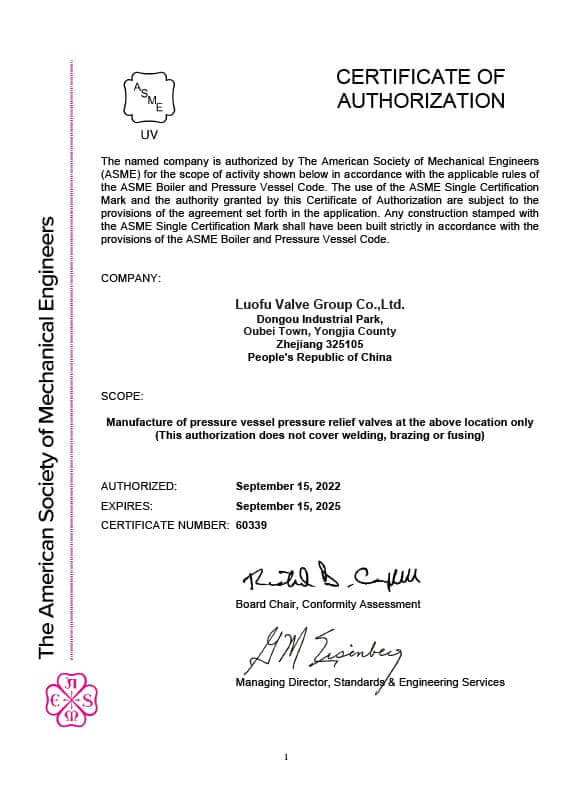
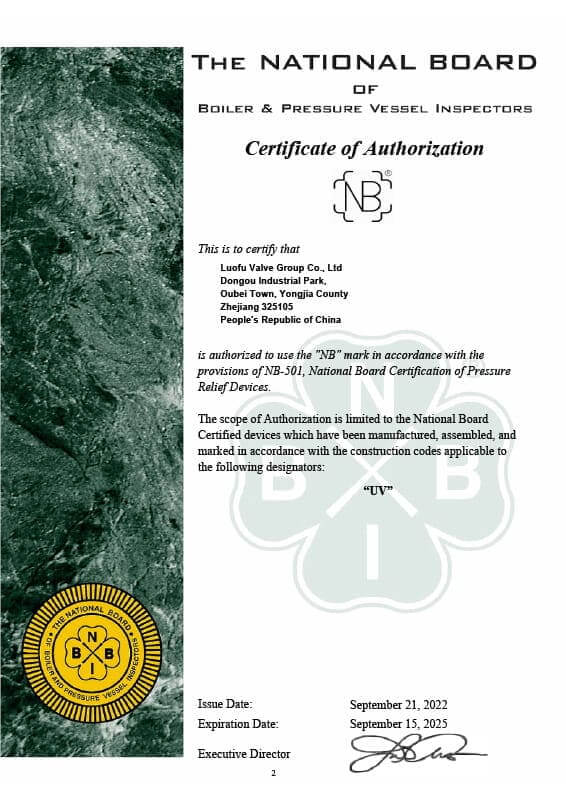
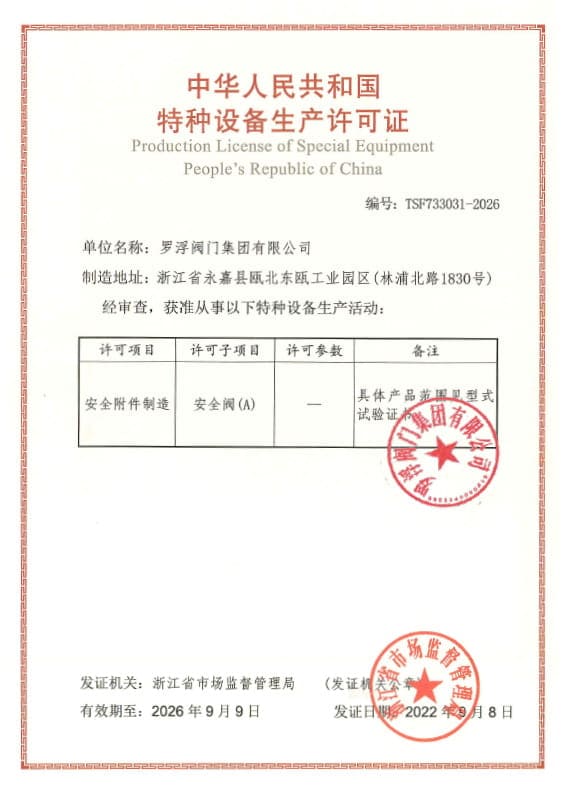
Orifice sizes use the API 526 letters F to T. The ASME, National Board, and TS documents cover Luofu's production of relief valves. The quotation states which of them apply to each tag:
What we need to quote this valve
Send these with your inquiry. A completed data sheet covers all of them, and the PSV data sheet page explains each line:
- Steam condition, saturated or superheated
- Required relieving capacity
- Set pressure
- Back pressure at the outlet
- Operating and relieving temperature
- Inlet and outlet size and rating
- Material requirements
- Design code (ASME, API, EAC, or the project specification)
- Quantity, per tag number
- Project country
No data sheet yet? Send what you have. We ask for the rest by email.
Related series
Questions engineers ask
How does the LFGS differ from the LFO and LFB series?
The LFGS works to tighter limits. Set pressure tolerance is under +1% for set pressures above 68.9 bar(g) (1,000 psig), overpressure is under 3%, and blowdown is 4% at most. LFO and LFB work to ±3%, 10%, and 10%. The LFGS nozzle is welded to the body, while LFO and LFB nozzles screw in.
Is the LFGS for saturated or superheated steam?
The series runs up to 650 °C (1,202 °F). State the steam condition, saturated or superheated, and the relieving temperature on the data sheet, and the sizing confirms the valve.
Does the valve have a lifting lever?
The LFGS rendering shows a lifting lever, which lets the operator lift the disc for a function check. State on the data sheet whether the valve needs a lever, and the quotation confirms it.